Self Defence Training
This is the core of what we do and our main goal with the training for you as a student!
Empowering Self-defence training for everyday heroes
Welcome to our dedicated page on Kali Sikaran, a dynamic Filipino martial art that blends ancient traditions with modern self-defense strategies. Designed for real-world application, Kali Sikaran equips practitioners with the skills to protect themselves and others effectively. With many of our members serving in law enforcement, our training philosophy is shaped by the demands of high-stakes environments, emphasizing adaptability, efficiency, and control. Whether you're a beginner or a seasoned professional, discover how Kali Sikaran can transform your approach to personal safety and professional readiness.
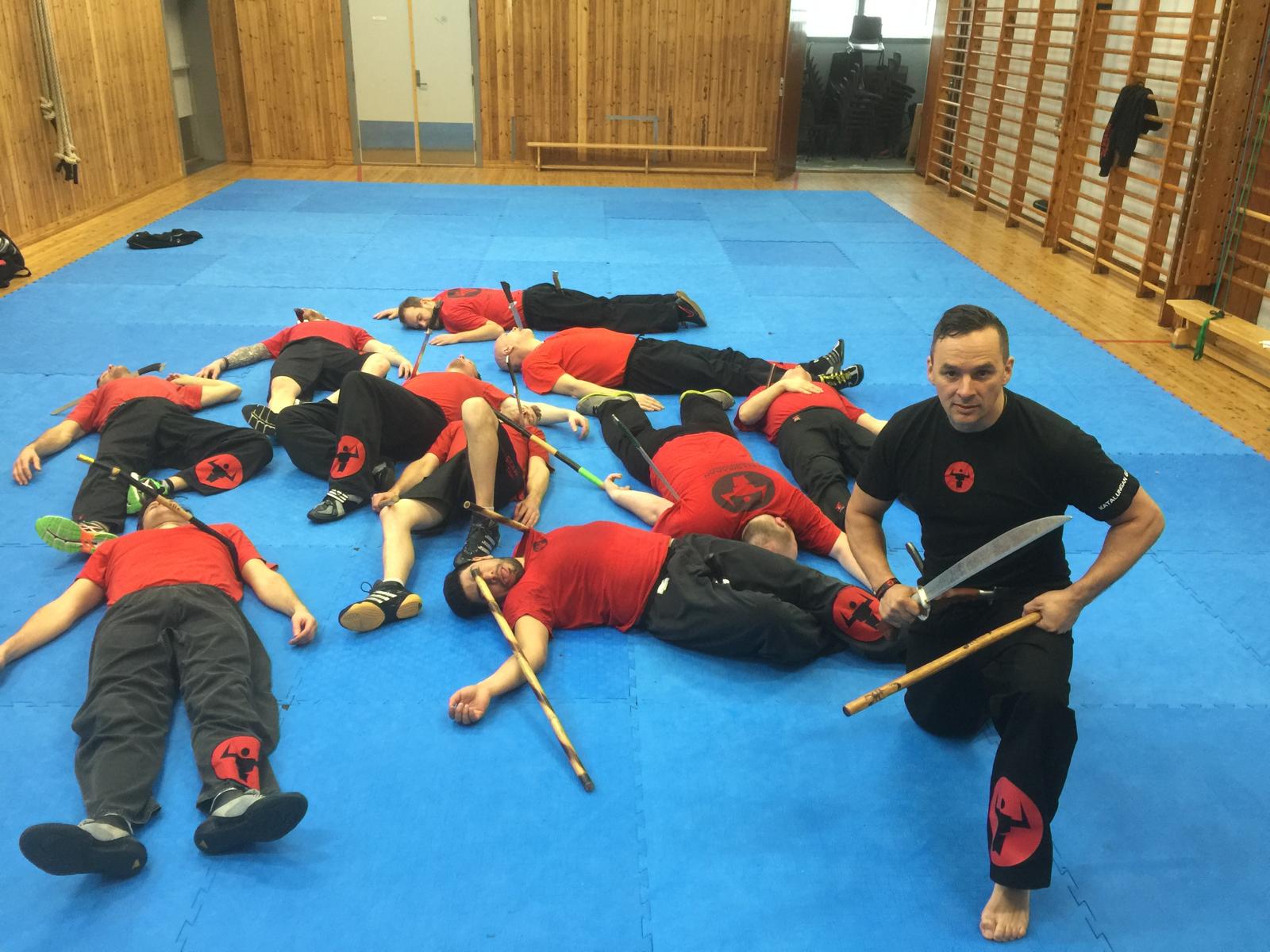
Empowering Self-defence training for everyday heroes
Kali Sikaran traces its roots to the ancient martial arts of the Philippines and Southeast Asia, drawing from the warrior traditions of the region. It integrates influences from the Majapahit Empire, including Filipino Kali, Indonesian Silat, and Muay Thai elements. At its core, Kali Sikaran is more than a fighting system—it's a philosophy that fosters discipline, respect, and personal growth. Practitioners learn to harmonize mind and body, building resilience to face life's challenges with a warrior spirit adapted for the modern world.
Key principles include:
Balance and Coordination: Mastering footwork and positioning for optimal agility.
Adaptability and Fluidity: Responding dynamically to changing threats.
Technical Precision: Refining techniques through repetitive, focused practice.
Mindfulness and Awareness: Heightening situational awareness to stay calm under pressure.
Respect and Discipline: Creating a supportive community that values commitment and ethical conduct.
Core Training Methods:
Building a Versatile Skill Set
Kali Sikaran's curriculum is structured around interwoven "blocks" or technique categories, starting with six foundational ones that form the basis of self-defense. Training progresses through phases, allowing practitioners to advance at their own pace while tailoring skills to their unique attributes like size, strength, and stamina. Functionality always takes precedence over form, ensuring techniques are practical and effective.
Key components:
Panantukan (Filipino Boxing): Utilizes hands, elbows, forearms, and even shoulders for strikes, sweeps, and manipulations. Unlike Western boxing, it's bare-knuckle focused and ideal for close-range defense.
Sikaran (Filipino Kickboxing): Combines upper-body strikes with powerful kicks, knees, and shins, emphasizing mobility, zoning, and distance control.
Solo Baston and Doble Baston (Stick Fighting): Develops coordination, speed, and reaction using single or double sticks (representing everyday objects like umbrellas or batons). These translate seamlessly to empty-hand techniques.
Daga (Knife Defense): A specialty of Filipino arts, focusing on edged weapon tactics—crucial for disarming and defending against knives, which are common in real-world threats.
Kadena de Mano (Chain of Hands): Close-quarters combat with fast punches, elbows, headbutts, and knees, perfect for confined spaces with no escape routes.
Dumog (Grappling): Includes throws, takedowns, and submissions, teaching how to handle ground situations without rules.
Advanced phases introduce artistic elements like Espada y Daga (sword and dagger), but the foundation remains rooted in realistic self-defense.
The Effectiveness of Kali Sikaran in Self-Defense
What sets Kali Sikaran apart is its proven track record in preparing individuals for unpredictable scenarios. Unlike arts focused solely on one-on-one unarmed combat, it addresses multiple attackers, armed confrontations, and improvised weapons. Training emphasizes prevention through heightened confidence and awareness, often deterring threats before they escalate. Practitioners report improved physical fitness, reaction times, and overall well-being, making it an empowering choice for anyone seeking practical protection.
Shaping Training for Law Enforcement Professionals
Many of our Kali Sikaran practitioners are law enforcement officers, and this influences how we structure our programs. The art's emphasis on efficient, controlled responses aligns perfectly with the needs of those in high-risk professions. For instance:
Knife and Weapon Defense: Daga techniques, derived from the Philippines' history with edged weapons, are taught worldwide to police and military, enhancing skills in disarming and baton handling (e.g., telescopic batons via stick fighting methods).
Close-Quarters Tactics: Kadena de Mano and Dumog provide tools for managing suspects in tight spaces or during ground struggles, minimizing harm while maintaining control.
Adaptability Under Stress: Training builds a "professional plan of action," similar to protocols used by officers, fostering focused decision-making in chaotic situations.
Physical and Mental Conditioning: Improves stamina, coordination, and mindfulness, helping officers stay sharp during long shifts or intense encounters.
Instructors with backgrounds in training military and police forces ensure our sessions incorporate tactical elements like those in Tactical CQC (Close Quarter Combat) programs. This not only boosts on-duty performance but also supports off-duty safety and stress management.
Join Our Community and Elevate Your Training
For us, Kali Sikaran isn't just about learning techniques - it's about building a supportive network where law enforcement professionals and civilians train side by side. Whether you're looking to enhance your self-defense skills or integrate proven tactics into your professional toolkit, our classes offer a welcoming environment for growth.