Our Sparring:
Realistic, Progressive and Skill-Building
Sparring forms the essential bridge in Kali Sikaran between isolated technique drills and fluid, adaptable application in dynamic situations. Our sessions use sticks (baston), kickboxing (Panantukan/Sikaran), and training knives (daga) to develop timing, distance control, flow and decision-making under realistic pressure.
We follow a carefully structured progressive scale that builds skills step by step - starting with low intensity and controlled parameters, then gradually increasing speed, power, and complexity while managing risk of injury at every level.
This methodical progression ensures safe, effective development for all practitioners, from beginners mastering fundamentals to advanced students refining high-level tactics in a supportive training environment.
Philosophy of Sparring
Sparring in Kali Sikaran follows the art's core principle: functionality over form. We train as we fight—realistically but responsibly. Sessions progress from light, technique-focused exchanges to higher-intensity scenarios that simulate stress and unpredictability.
Core guiding principles:
Progressive Scale — Begin with light, focused work to ingrain proper mechanics, then layer in speed, power, and variables only as skills solidify.
Safety & Risk Management — Protective gear, clear communication, and controlled escalation keep training effective without unnecessary injury.
Realistic Application — Techniques flow naturally between ranges and tools, preparing for unpredictable encounters.
Skill-Building Focus — Prioritize quality movement, awareness, and adaptability over raw aggression.
Mutual Growth — Respect partners, communicate intensity, and learn collaboratively in a positive community.
Types of sparring we practice
Our sparring is modular, allowing focus on specific weapons or ranges while integrating the full Kali Sikaran system.
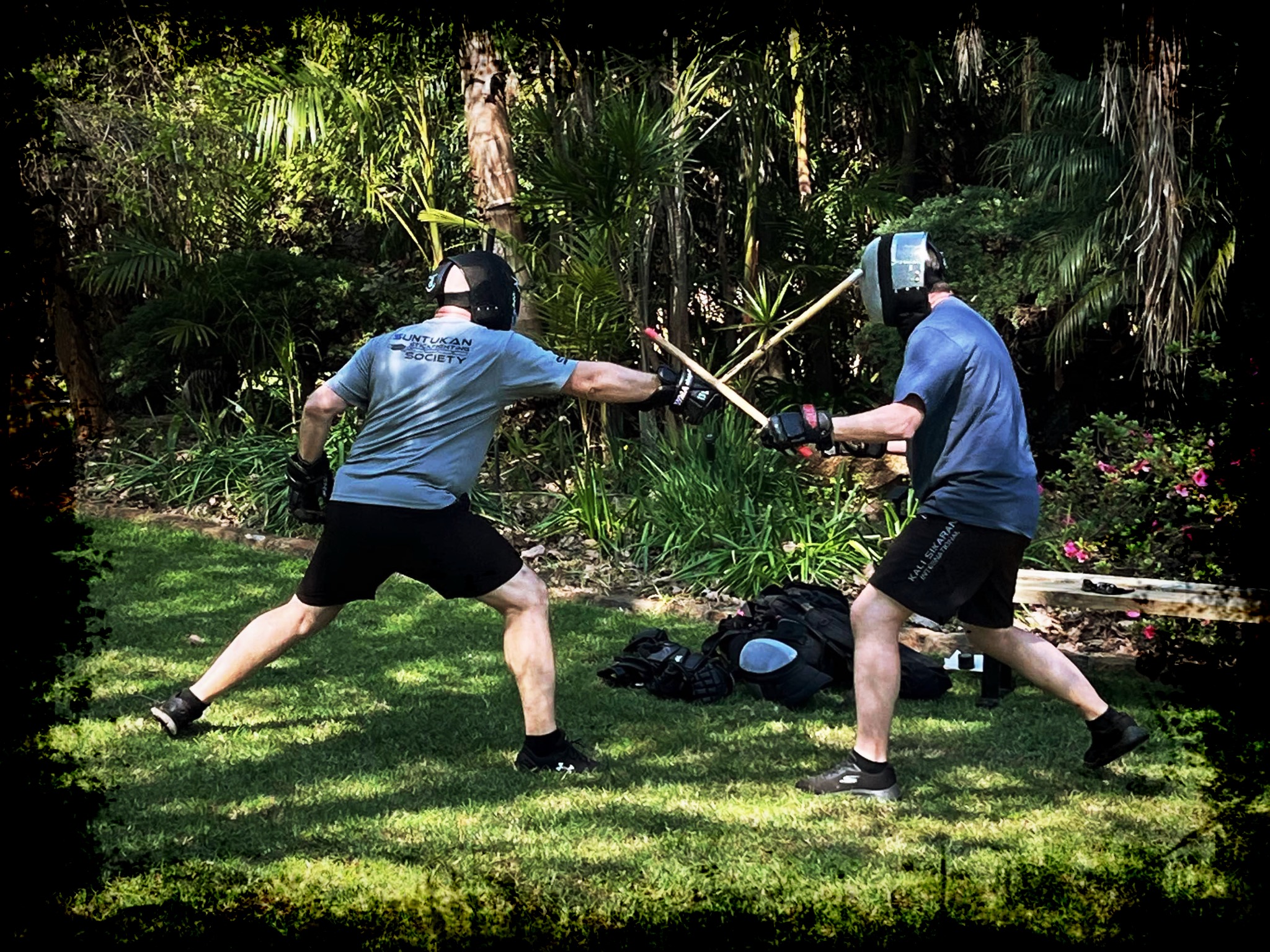
Stick Sparring
(Solo Baston & Doble Baston)
Tools — Rattan sticks.
Focus — Angles of attack/defense, disarms, strikes, blocks, and transitions to empty hands.
Format — Single-stick vs. single-stick, double-stick flows, or mixed (one vs. two).
Benefits — Develops hand speed, coordination, and weapon familiarity; translates directly to baton use or improvised impact weapons common in law enforcement scenarios.
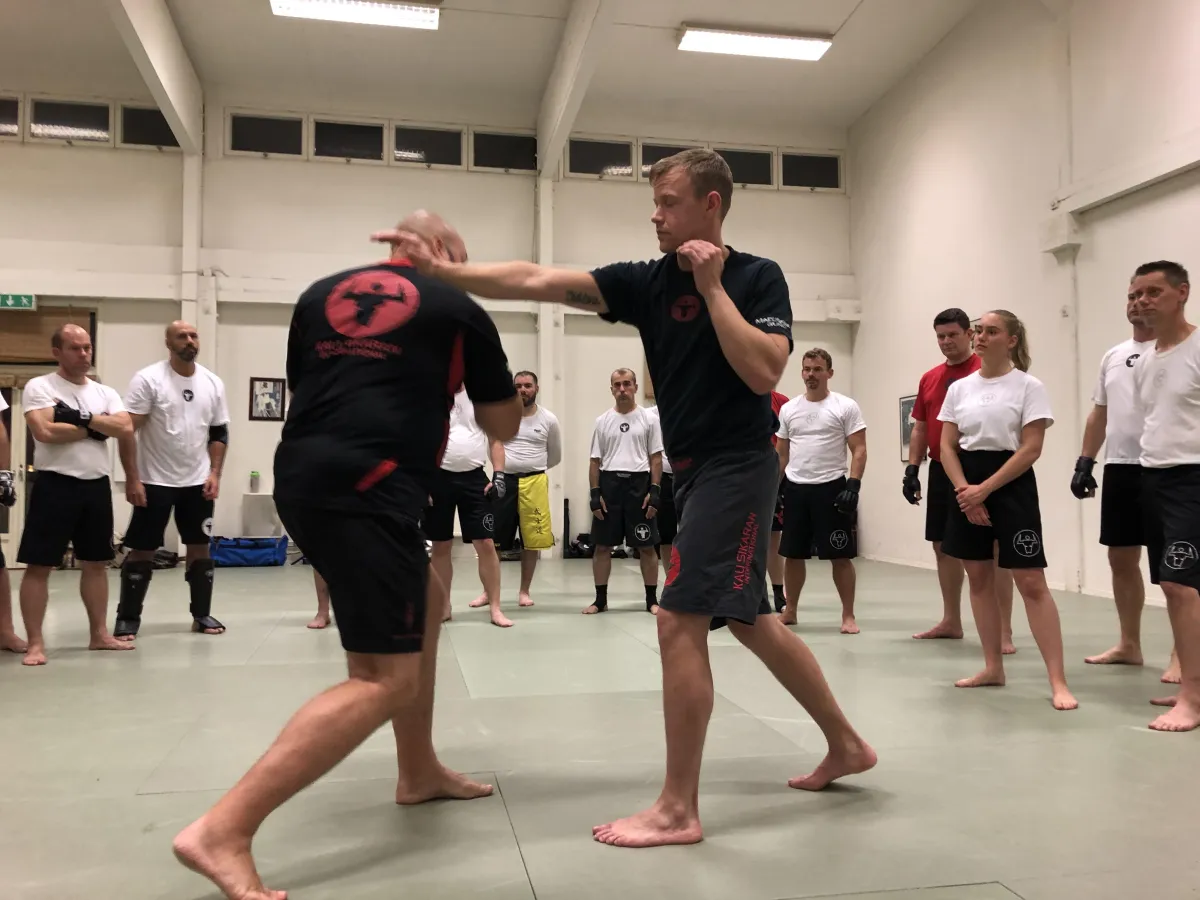
Kickboxing Sparring
(Panantukan & Sikaran)
Tools — Gloves, shin guards, mouthguard; light to full contact depending on level.
Focus — Punches, elbows, kicks, knees, sweeps, clinch work, and limb destructions.
Format — Continuous light sparring, round-based, or scenario drills (e.g., multiple attackers).
Benefits — Builds striking power, footwork, and conditioning; improves close-range control and de-escalation tactics for Law Enforcement.
Training Knife Sparring
(Daga)
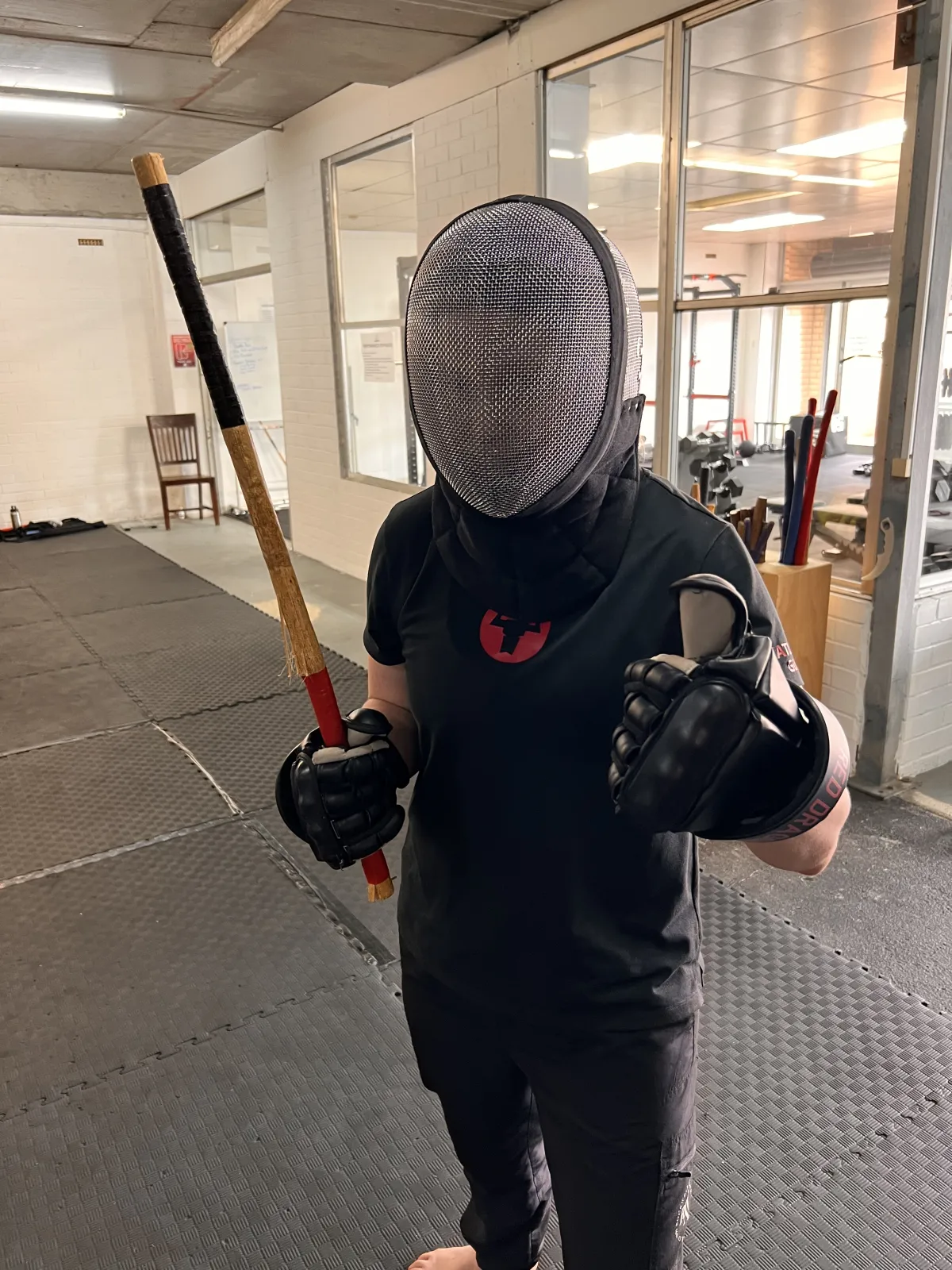
Tools — Padded training knives, eye protection, mouth guard and sometimes fencing masks.
Focus — Knife defense, disarms, counters, trapping, and blade awareness; emphasis on surviving edged-weapon threats.
Format — Controlled feeds and responses, progressive free sparring, or scenario-based (e.g., knife vs. empty hand or some kind of equaliser).
Benefits — Critical for anyone facing edged weapons; teaches distance management, redirection, and rapid transitions—skills proven effective in real-world defensive encounters.
Safety Protocols and Equipment
Safety remains paramount across all levels of our progressive scale.
Rules:
Correct protective gear. If you're not investing in protective gear you are not considered serious enough to be allowed to spar, even for "fun".
Controlled contact - no full-power head strikes unless in heavily protected scenarios.
Immediate "tap out" or verbal stop ends any exchange.
Intensity matches partner skill and agreement.
Instructors oversee every session to guide progression and ensure safety.
These protocols enable realistic, high-quality training while minimising risk at every stage.
Benefits of Progressive Sparring
Regular sparring on our structured scale delivers:
Sharper timing, distance judgment, and reaction speed.
Greater adaptability and flow between techniques and ranges.
Improved physical conditioning, endurance, and coordination.
Enhanced mental resilience, focus, and calm under dynamic pressure.
Deeper confidence in applying Kali Sikaran skills effectively.
A cultural appreciation of the violent past days of sword fights and stick fighting rebel fighters.
Practitioners experience steady, measurable growth as they move along the progressive ladder - building a strong, reliable foundation before tackling higher speeds, power, and complexity.

Join Our Sparring Sessions?
Sparring is woven into our regular Kali Sikaran training programs, with dedicated sessions available for focused development at various levels, mainly from te beginning of advanced student levels. Whether you're starting with basics or advancing through higher-intensity work, our progressive approach ensures safe, rewarding progress.
We generally don't "allow" just anyone to join, we invite them. Sparring requires skills, humility and a respectful mindset.
We do run stick sparring events called Headhunting in the Hills (in Perth, Western Australia). Maybe we'll see you there?